
For a start this award has a history of having less to do with actual contributions and more to do with some part of a larger agenda. Some pretty dubious people have received this. Many more were patently undeserving, says Mohan Guruswamy.

'There are a lot of things to make the series The Night Of relevant.' 'The decision to make it -- not only South Asian, but Pakistani Muslim -- is intensively relevant with what's going on today.'

Aseem Chhabra gives us the top films that enriched his year.

'Today if you look at the way India is growing many people are saying the sleeping elephant has finally woken up, is dancing!' 'I have travelled extensively, in about 60 countries. In all these the moment you say India, the first thing they mention is either an actor's name. Or they start humming a song.' 'I wanted to be in Bollywood. It is the most powerful medium we have in this country. That's soft power.' Listening in on Shobhaa De, Kabir Khan, Vikas Swarop and Saffron Art CEO Hugo Weihe speak on India's Soft Power, Hard Influence.
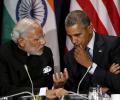
'Big countries do not agree on every set of issues.' 'Look, one of the differences in the relationship is that when we do not agree, we are sitting down and talking to each other.'

Much of the negative perceptions of the north-east diaspora owe their origin and existence to the perverse policies of the central government toward the region and its people. This realisation must be the beginning of an earnest endeavour to address the issue, says R N Ravi.

'The blood that runs in the veins of our family can never be anti-national.' 'They called Kanhaiya a traitor for questioning the Indian Army. Do they know that our cousin was killed by militants in Manipur while serving with the CRPF?' Archana Masih/Rediff.com travelled to the land of Lal Salam, Lal Sitara and comrades to find out what moulded India's most talked about student leader, Kanhaiya Kunar.
.jpg)
The disparity between the outlook of the rich and poor was greater in India than in any other emerging economy. Indians might want to be worried about this because this suggests that the rich are really out of touch with the poor, Bruce Stoke, Director of Pew Research Center, tells Faisal Kidwai in an interview.

'He was believed to finish his own work in an hour and spend the remainder of the time walking from one office to another, sitting down with the harried junior staff and helping them sort out the problems they were working on.'
